
Free 3D Ping Pong
Play against AI or other players online.
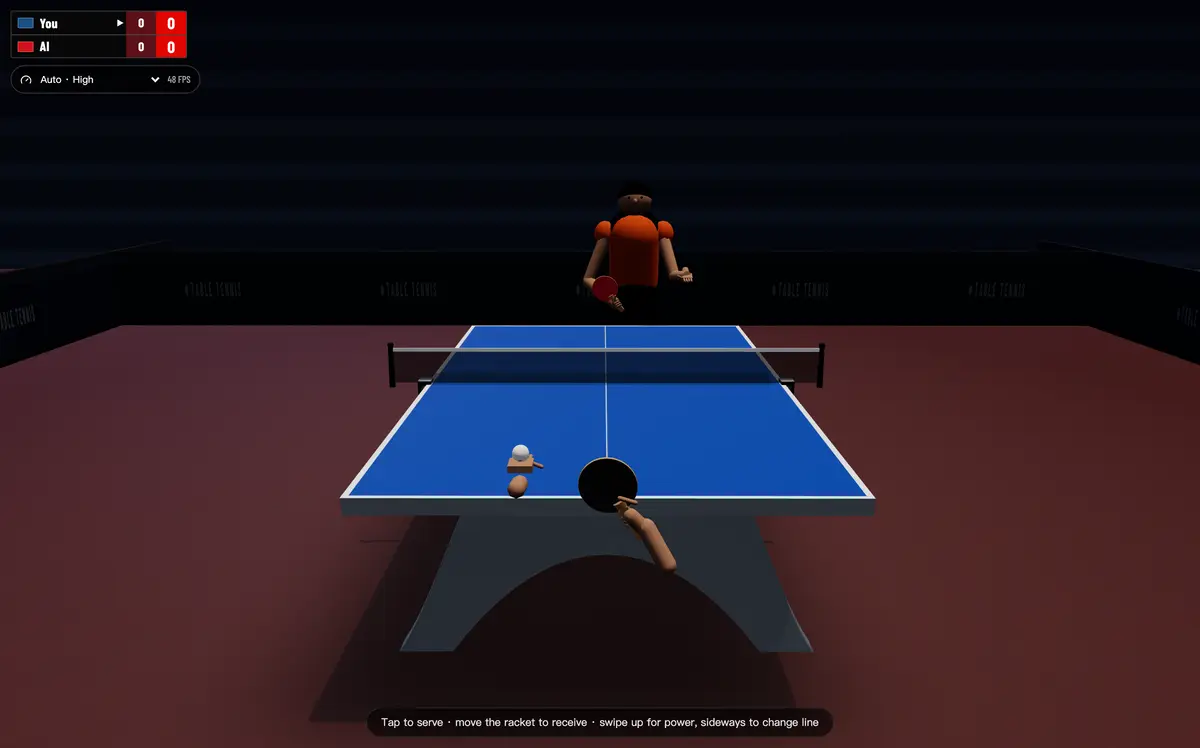
Play right in your browser, with no download or account required. The table, net, and ball are modeled on regulation table tennis dimensions. Your swing speed and direction, along with the incoming spin, shape each return's flight and placement. Choose an AI opponent that suits your level, find an opponent in the public lobby, or invite a friend to a private room.
Loading...
Read the ball before you swing.
In AI matches, the sidebar gives you hints in two stages. During your opponent's backswing, it uses the paddle angle and shoulder alignment to predict the incoming direction. After the ball crosses the net, it identifies the forehand, backhand, or middle lane and suggests a block, push, loop, or drive. It also shows the spin—topspin, backspin, sidespin, or no spin—and whether the ball is short, half-long, or long. After each point, it explains errors such as hitting the net, going long or wide, allowing a second bounce, or swinging without making contact. You can turn hints off at any time. These calculations run in your browser.
Check height, spin, and speed before you return.
Start with height. A ball close to the table is a poor choice for a smash; forcing it downward will often put it in the net. Use a controlled block or push, depending on the spin, and wait for a better chance to attack.
Then read the spin. Topspin can send a passive return high or long, so close the paddle angle or guide the ball forward with a short stroke. Backspin can drag a flat return into the net. Push it back or use an upward brushing stroke to lift it.
Finally, judge the speed. Against a fast ball, get your paddle ready early and keep the block controlled. A slower, higher ball gives you time to attack with an upward swipe. Aim to make contact near the center of the paddle; catching the edge can send the ball wide.
Save the smash for a high ball.
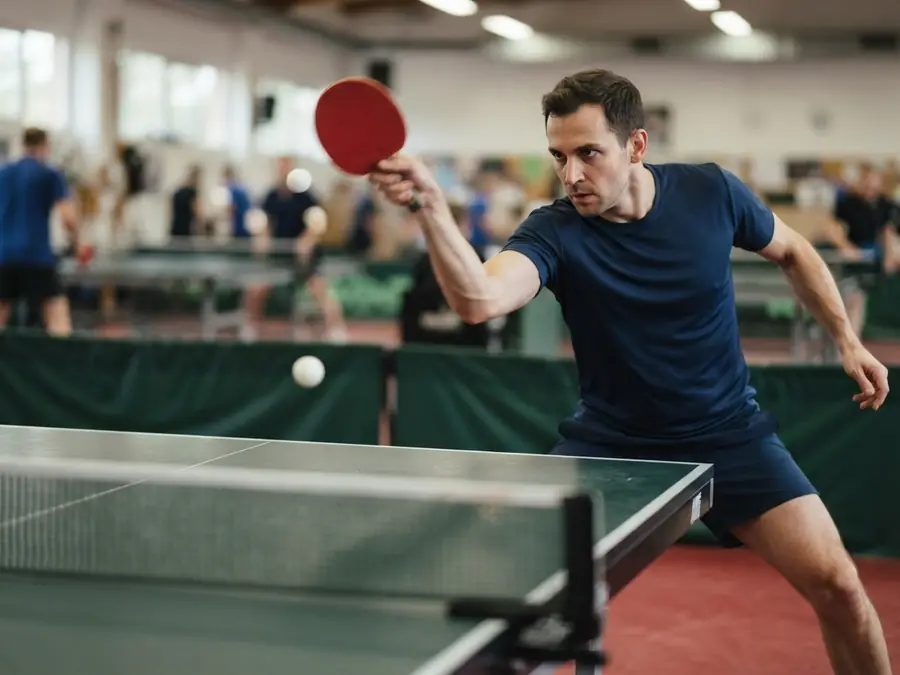
A smash needs enough height to clear the net. If the ball is near net height, forcing it down makes it difficult to clear the 6-inch net. Use a controlled block or push instead, depending on the spin, and wait for a higher return. In AI matches, the sidebar suggests a shot before the ball bounces, so you can compare its recommendation with your own read.
Control the return with your swing.
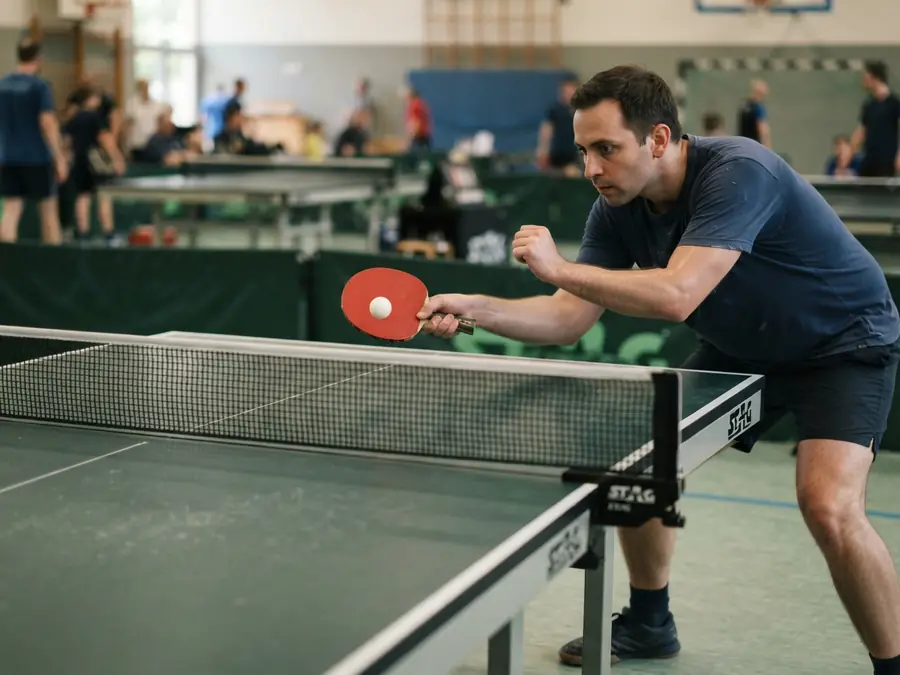
A faster forward-and-upward swipe produces a more aggressive drive or smash. Moving the paddle into the ball's path without adding much swing produces a block. Swipe sideways to change direction, but keep the movement controlled: a large sideways swipe or off-center contact can send the ball wide. Line up the center of the paddle first, then add power or change placement.
Attack the slow, high return.
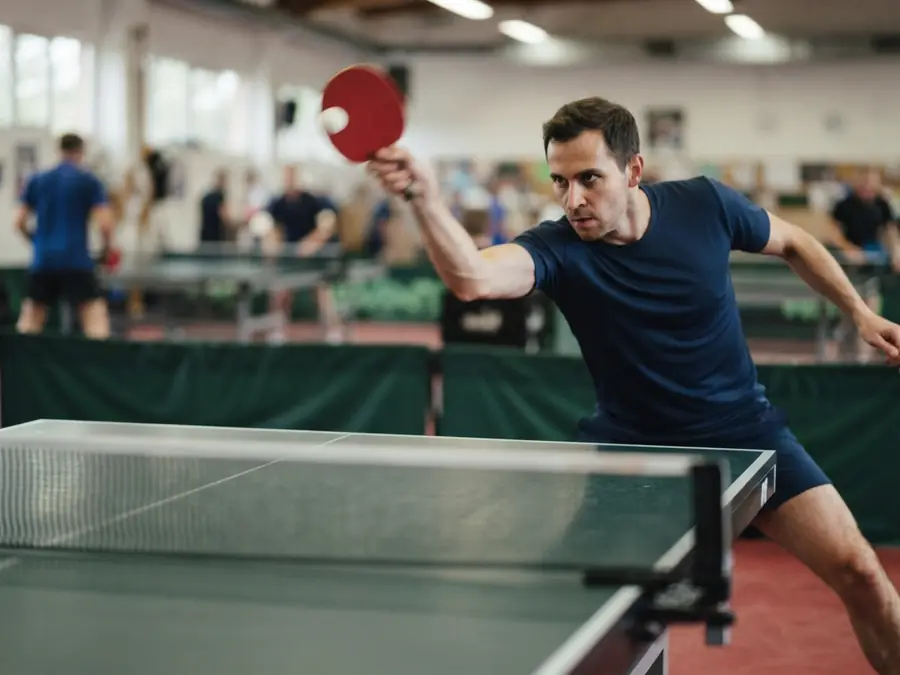
If you only block a slow, high ball, you often leave your opponent in control of the next shot. Use that extra time to attack with an upward swipe and place the ball wide to the forehand or backhand. If you lose the point, check the sidebar's explanation and watch the rally again at 0.45× speed to see what happened.
Frequently asked questions
What makes this 3D ping pong game different?
The game combines table tennis physics with live hints during AI matches. The table is modeled at 2.74 by 1.525 meters, about 9 by 5 feet, with a height of 76 centimeters, about 30 inches. The net is 15.25 centimeters high, about 6 inches, and the ball is 40 millimeters in diameter. Ball flight accounts for gravity and spin, with 240 physics steps per second. During an AI rally, hints identify placement, spin, and a suggested return before the point ends. Afterward, the sidebar explains errors, and you can replay the point in slow motion.
How do you serve, and what are the scoring rules?
Click or tap to serve. Swipe up for a long serve, down for a short backspin serve, or sideways for sidespin. A legal serve must bounce on your side before crossing the net and bouncing on your opponent's side. If it touches the net but is otherwise legal, it is a let and you serve again. Games are played to 11, and you must win by at least 2 points. Service changes every 2 points until 10–10, then after every point. Choose a single game or a best-of-three, best-of-five, or best-of-seven match.
Do hints or replays play the ball for me?
No. Hints show the incoming direction, placement, and a suggested return, but you still control the paddle and make the shot. Replay plays back the last point at 0.45× speed so you can review the rally. Turn hints on or off in the sidebar whenever you want.
How can I play ping pong online against other players?
Open Online Rooms to find an opponent in the public lobby, or create a private room and send the link to a friend. Once both players take a seat, you can play. If your connection drops, you can return to your seat and continue. This is online play between two players, not a shared-keyboard mode on one device.
Do I need to download anything or create an account? What data is sent?
No download or account is required. The game runs in a desktop or mobile browser with WebGL support enabled; you may need to turn on hardware acceleration. In AI matches, physics runs on your device rather than uploading every shot. Online rooms sync the current match's score, ball state, and seat information.
Can I play on my phone? What are the desktop controls?
Yes. On a phone, move your finger across the table area to control the paddle. Tap to serve, swipe up to add power, swipe down to push with backspin, or swipe sideways to change direction. On a computer, move the mouse to control the paddle. You can also serve with the keyboard: Space for a regular serve, Up Arrow for a long serve, Down Arrow for a short backspin serve, and Left or Right Arrow for sidespin in the corresponding direction.
How do I return topspin and backspin?
Adjust the paddle angle to the incoming spin. Against topspin, a passive block can pop up or go long, so close the paddle angle and guide the ball forward with a short stroke. Against backspin, a flat return can drop into the net. Swipe down to push it back, or brush upward firmly to lift it. The sidebar identifies heavy topspin, topspin, no spin, backspin, or heavy backspin, along with any sidespin, while the ball is in flight.
Why do my returns keep hitting the net or going out?
Check the ball's height and spin, the size of your sideways swipe, and where it hits the paddle. Smashing a low ball often sends it into the net. A flat return against backspin can also hit the net, while the same return against topspin can pop up and go long. A large sideways swipe or contact near the paddle's edge can send the ball wide. Swinging too early or too late may miss it altogether. After each point, use the sidebar's error explanation—net, long, wide, second bounce, or missed swing—to decide what to change.
How do I beat the AI, and which difficulty should I choose?
Start at a lower difficulty until you can serve and return consistently, then move up. Easier opponents use mostly flat shots, lighter spin, and smaller angles. Higher settings introduce more changes of direction and spin. The toughest opponents play faster, move you from side to side, and show full backswing animations. Watch the shoulder turn and paddle angle during the backswing, then move toward the likely return instead of waiting until the ball is close.
How do I control placement and change direction?
Line up the center of your paddle with the incoming ball, then use a sideways swipe to change the return's direction. An upward swipe adds power. Start with small movements and practice sending returns to the forehand and backhand sides. Large sideways swipes or contact near the paddle's edge can send the ball wide. In AI matches, work on consistent placement to one area before alternating sides to move your opponent.