
This page is how a point is awarded: who gets to 11, what makes a serve legal, when a net serve is a let, where a rally is lost, and when service changes. It is not a full tournament handbook. Toss height, clothing, and surrounds are not checked here. The table, net, and ball follow regulation table tennis dimensions: 9 ft by 5 ft (2.74 m × 1.525 m), with a 6 in (15.25 cm) net.
First to 11, still needing a 2-point lead
A table tennis game is played to 11. The first side to 11 with at least a 2-point lead wins the game. 11-9 can end it; from 10-10 you keep going to 12-10, 13-11, and so on until one side leads by two. There is no time limit, and this table does not use the old 21-point game.
In a match of several games, you win the match by taking the required number of games. The score resets between games, and the other side serves first in the next one.
A serve bounces on your half, then over the net onto theirs
When it's your serve, tap or swipe up at the near end. A legal serve does three things in order: bounce on your half, clear the net, then bounce on their half. Miss a step and it's a fault; they get the point.
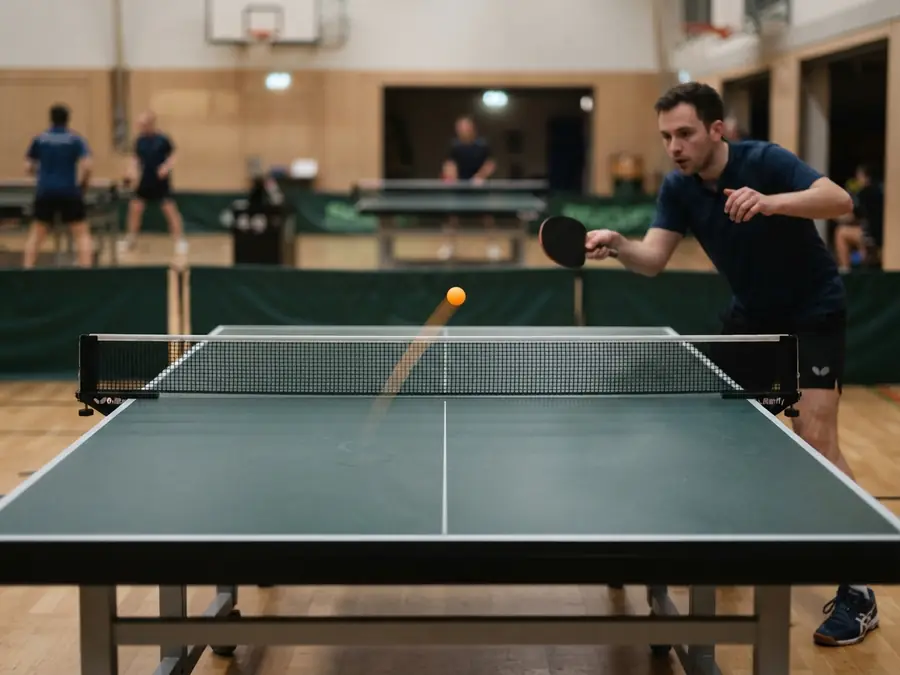
- Swipe up for a long serve that lands deeper.
- Swipe down for a short backspin serve that dies closer to the net.
- Swipe sideways for sidespin that fades left or right.
The swipe only changes how the ball flies, not that bounce order. Into the net, onto their half first, or off the end or side is a fault, and they score.
If a serve clips the net and still lands on their side, it's a let
If the serve touches the net and then lands legally on their side, the point is wiped, nobody scores, and the same person serves again. If it clips the net and does not land on their side, it's still a fault and they score.
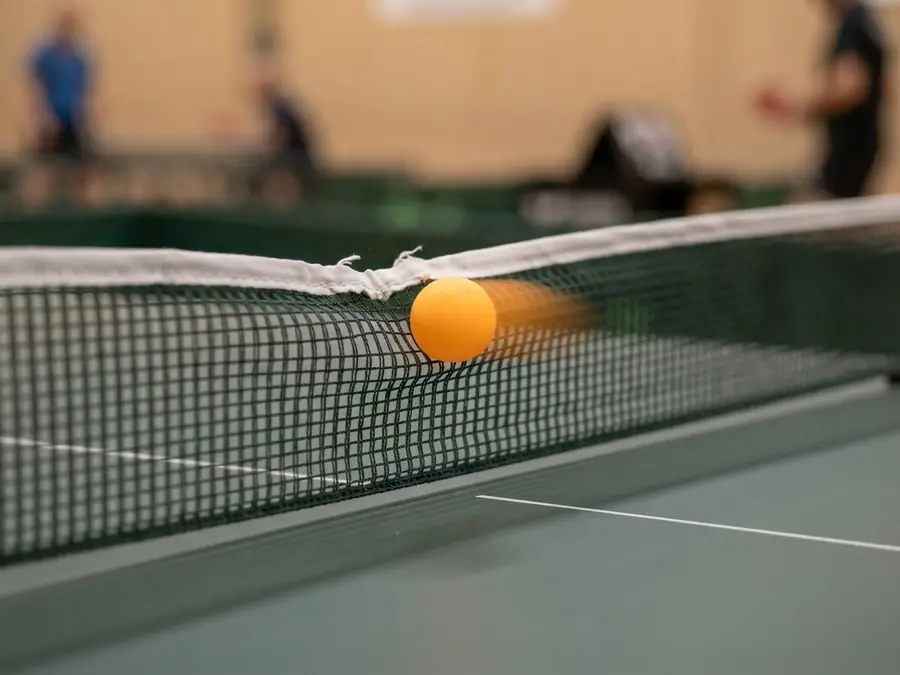
During a rally, a return that clips the net but still goes over and lands on their side is good; play on. Only the serve gets a let for a net cord.
In a rally, return a ball that bounced on your half so it bounces on theirs
After it bounces on your half, hit it back so it bounces once on their side. A nick on the edge still counts; fully past the end line or sideline is out.

| Situation | You | Opponent |
|---|---|---|
| Their return hits the net or doesn't clear it | +1 | — |
| Your return goes long | — | +1 |
| Your return goes wide | — | +1 |
| The ball bounces twice on your side | — | +1 |
| It bounced on your half and you missed it | — | +1 |
| They make the same miss | +1 | — |
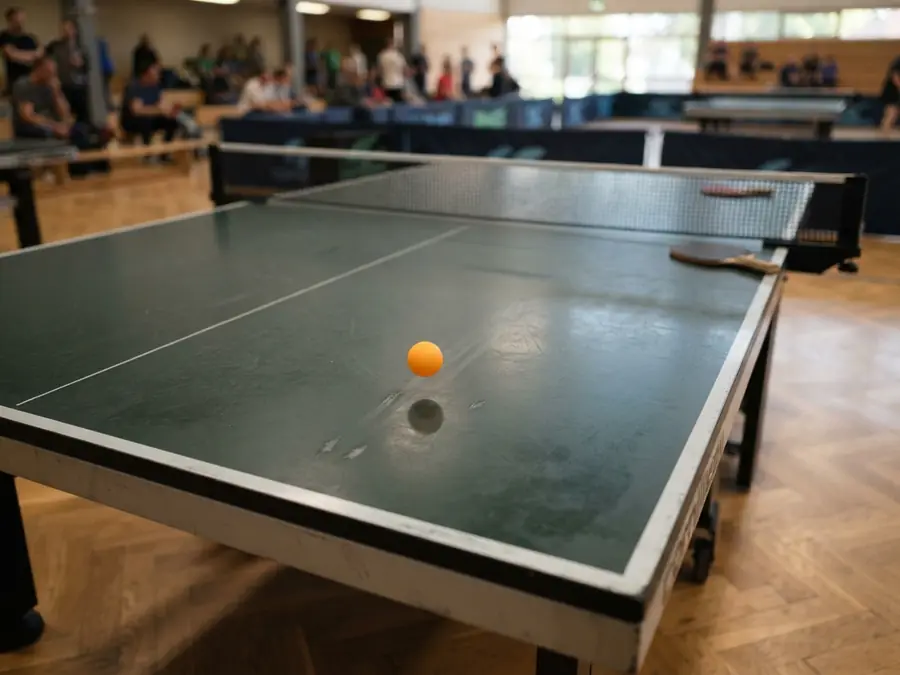
Service changes every 2 points, and every point from 10-10
The side you pick in the sidebar serves first. Until both sides reach 10, service changes every two points: 0 and 1 stay with the opening server, 2 and 3 go to the other side, and so on.
Once both sides have 10, service changes every point until someone leads by 2 and the game ends. In a multi-game match, the other side starts serving in the next game.
Single game, best of 3, best of 5, best of 7
Every game uses the 11-point scoring above. How many games you need to win the match is set in the sidebar. The default is best of 3.
- Single game: first to win 1 game, match over.
- Best of 3: first to 2 games.
- Best of 5: first to 3 games.
- Best of 7: first to 4 games.
If one side can no longer be caught before the listed games are finished, the match ends there; you don't play the leftover games.
How this site calls it, and what a tournament still checks
Scoring, the serve bounce order, lets, two-point service changes, and point-by-point changes from 10-10 match common competition rules. The difference is the input and what gets checked.
- Serve motion: A tournament serve tosses the ball from an open palm. Here you tap or swipe up; toss height is not checked.
- What is called: This table calls bounce, net, out, two bounces, and a miss. Hidden serves, time-outs, and clothing are not checked.
- Reading the ball: Against AI the sidebar names the incoming shot. A tournament doesn't give you that.
- Online rooms: Both sides use the same 11-point scoring, but there are no hints or one-sided replay.
Rules FAQ
How many points is a table tennis game? Is it still played to 21?
This table uses 11. First to 11 with a 2-point lead wins the game. The old 21-point game is not used here.
What happens at 10-10?
You keep playing until one side leads by 2, such as 12-10 or 13-11. From 10-10, service changes every point.
Does a serve that clips the net cost the point?
If it still lands legally on their side, it's a let: nobody scores, and the same person serves again. If it doesn't land on their side, it's a fault and they score.
Why does a serve have to bounce on my side first?
That's the first bounce of a legal serve. Onto their half first, into the net, or straight off the table is a fault, and they get the point.
The ball bounced twice on my side. Who scores?
They do. After it bounces on your half, you have to return it before the second bounce; miss that, and the point is over.
When does service change?
Every 2 points until 10-10, then every point. In a multi-game match, the other side serves first in the next game.
How many games do I need in a best of 3?
First to 2 games. Best of 5 is first to 3; best of 7 is first to 4. Each game is still to 11, win by 2.
Are online rooms scored the same as vs AI?
The scoring, serve, let, and service changes are the same. The tools differ: vs AI you can use hints and replay; an online room syncs the score and the ball for both sides and does not offer those two.